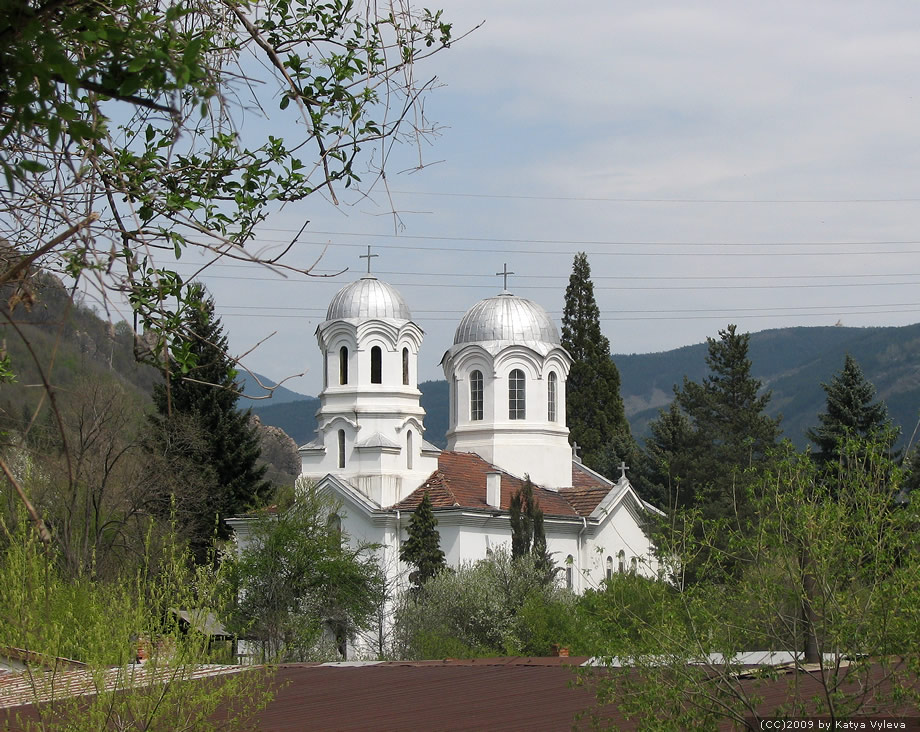
Shot on May 14th, 2009, at sunset…
(Canon S5 IS, F 3.5, 1/400, ISO 200; image slightly edited in Fireworks)
Shot on May 14th, 2009, at sunset…
(Canon S5 IS, F 3.5, 1/400, ISO 200; image slightly edited in Fireworks)
On our short trip, last week-end, I took a shot of a very nice green-blue lizard.

Later, me and Ani discovered that actually this lizard is called European green lizard, and is also known as Lacerta viridis.
Its name contains only ‘green’, but I would have called it green-blue, as its back is really green, but its stomach has a very intensive blue color (as you can see from the photo, too).
So I decided to publish a few more shots of it:


If you are a professional Web designer and create HTML/CSS code by hand for living, then you might be interested in the fact that Dave Shea switched from XHTML 1.0 to HTML 4.01.
It’s a fact that:
1) Lately, the HTML 5 standard gains up in speed.
2) XHTML 2.0 probably will never become a successor to XHTML 1.0. In fact, XHTML 2.0 probably will never exist at all.
3) Quite a few prominent Web designers and CSS/HTML coders are abandoning XHTML 1.0 and go back to HTML 4.01 (some of them even experiment very seriously with HTML 5).
What HTML standard for documents do you prefer? And am I the only one who (still) prefers XHTML 1.0 over HTML 4.01? :-)
It followed the interesting discussion at mezzoblue — I managed to read almost all of the comments there!
But, sometimes, it is not very clear to me as to where & why are going the Web Standards, guided by W3C.
After HTML 3.2, HTML 4.01 came, then the XHTML 1.0 standard was adopted, and now HTML 5 is developed? There’s almost no logic behind the versioning; plus, we have first the HTML language (which, in turn, derived from SGML), then W3C decided that it would be a great idea to combine XML + HTML (and so, XHTML 1.0 was ‘born’), and finally, they turn back to the idea of ‘pure’ HTML, and in the new standard (HTML 5), the ‘X’ is missing…
Last Saturday, we met my grand-pa for the first time. On Sunday, he turned 95! :-)
Here, I’d like to share a few shots from this trip (we traveled from Sofia around 200 km to the East to meet him):




…from the last few days:

(NDK, Sofia, May 1, 2009 ~ 18:00)

(water drops in the grass, near Dimitar Blagoev P&P house, Sofia, May 1, 2009 ~ 19:30)

(a tulip in the grass, Svoge, May 4, 2009 ~ 15:30)

(green grass at sunset, Svoge, May 4, 2009 ~ 19:10)
I love the grass, the Sun, the rain, the colors… :-)
His name is е Joseph Poolpo.
This man is unique with this — he can sing in three voices, simultaneously (beat box, but in three voices!).
Two years ago I’ve found a video with him; the video was on YouTube and later I have found that it is deleted (possibly a problem with copyright).
But these days, by accident, I have discovered another recording with him:
I hope that YouTube won’t delete the video this time — watch it, while it is possible! :-)
I was searching for some time the answer to the following question:
What’s the difference between utf8_unicode_ci and utf8_general_ci (MySQL collations)?
I have almost no knowledge in PHP/MySQL, so I have read with the great interest the following info:
http://forums.mysql.com/read.php?103,187048,188748#msg-188748
Generally speaking, it looks like the difference between these two collations is not too big; also, it appears that utf8_unicode_ci is more precise, and utf8_general_ci is faster.
I suppose also that if you plan to write in more than one language and/or to write in a language other than US/UK English, then utf8_unicode_ci is the better choice to make — for example, the German letter “ß” will be correctly sorted near “ss” (this won’t hapen, if you use utf8_general_ci collation). There are other differences, too, so drop a look at the article, if the topic interests you! :-)
April 17th, a small trip to Svoge (Bulgaria) — just a few shots and some color corrections:
Sofia, Central train station:


Svoge and around: